
ADUs and Prefab in 2026: The Rules, the Costs, and the Real Timelines
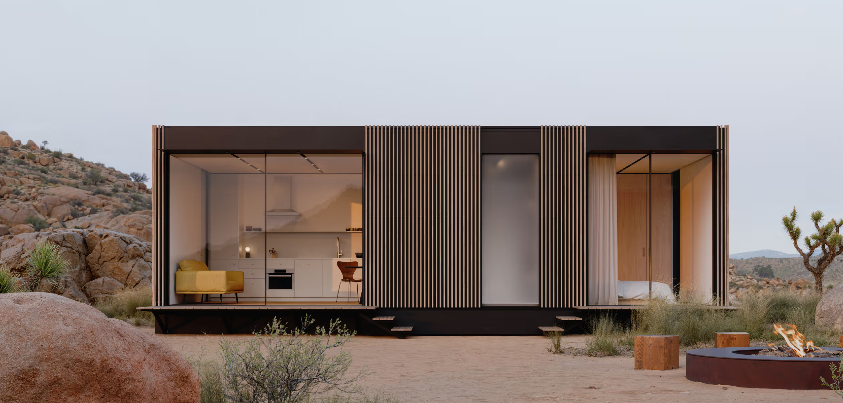
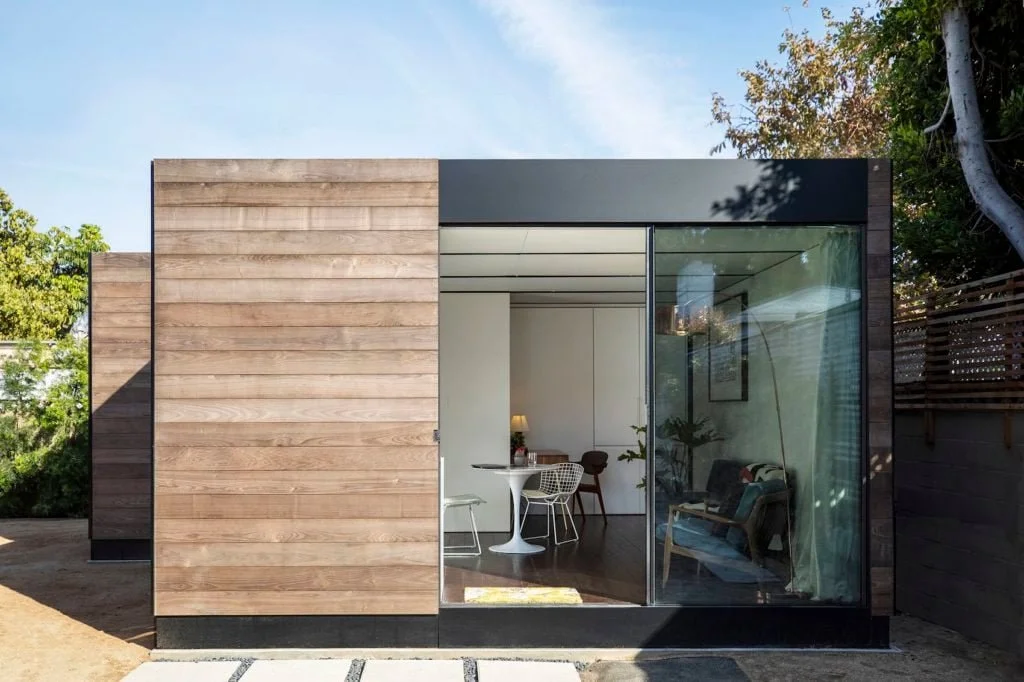
By treating prefab homes as coordinated construction systems rather than novelty units, they’re showing how off-site fabrication can integrate cleanly with real-world jobsite conditions.
In the prefab and modular space, Cover has carved out a solid niche by treating small homes like precision-built systems instead of one-off backyard projects. Their work is less about flashy architecture and more about repeatable construction logic that actually works in the field.
California permitted about 28,000 accessory dwelling units in 2023, up from fewer than 800 a decade earlier. In the city of Los Angeles, ADUs accounted for roughly 43 percent of all newly permitted housing units in 2024. That is the fastest moving segment in California residential construction, and it has pulled a set of prefab manufacturers along with it.
This piece covers what the ADU rules actually require, what the permitting timeline really looks like against the statute, what the numbers say about cost and value, and why most prefab housing companies have failed while a few have not.
Where the law stands
California’s ADU statute was renumbered in 2025. What was Government Code section 65852.2 is now section 66310 and following, so older citations will not match current code. The core requirements from the state Department of Housing and Community Development handbook:
| Requirement | Rule |
|---|---|
| Decision deadline | 60 days from a complete application, ministerial review |
| Completeness determination | Cut from 30 days to 15 days by SB 543, effective January 1, 2026 |
| Detached size | Jurisdictions must allow at least 850 sq ft, or 1,000 sq ft for multi-bedroom. Local caps cannot fall below 800 sq ft |
| Setbacks | Side and rear capped at 4 ft. No setback at all for conversions of existing structures. Front setbacks cannot be applied so as to preclude an 800 sq ft unit |
| Parking | Maximum one space per unit or per bedroom, whichever is less. Fully exempt within half a mile of transit, in historic districts, and when part of the primary residence |
| Owner occupancy | Prohibited as a requirement for ADUs, made permanent January 1, 2024 |
| Impact fees | Units under 750 sq ft are exempt. SB 543 adds a school impact fee exemption under 500 sq ft |
Four more bills signed in October 2025 took effect January 1, 2026. The one with teeth is SB 543’s companion, a 2025 bill also numbered SB 9 and distinct from the 2021 lot split law: local ADU ordinances are null and void if not submitted to HCD within 60 days. AB 462 took effect immediately on signing and imposes a 60 day deadline for coastal development permits on ADUs, while allowing certificates of occupancy for detached ADUs even when the primary dwelling is incomplete after a disaster, which matters directly for fire rebuilds.
California is no longer unusual here. As of July 2025, researchers at the Mercatus Center counted 18 states with broadly legalized ADUs, ten with strong laws and eight weaker. Washington requires two ADUs per residential lot in urban growth areas and caps impact fees at half the principal unit’s. Montana bars additional parking requirements, impact fees, and owner occupancy rules outright and caps the application fee at $250. Massachusetts made ADUs by right in single family zones in February 2025 and logged 844 applications with 550 approved across 170 communities in the first half of that year.
The permitting reality
The 60 day statute is widely missed. The Terner Center at UC Berkeley analyzed roughly 29,000 ADU applications across Los Angeles, Orange, and San Diego counties from 2018 to 2022 and found median timelines of 147 days in Los Angeles County outside the coastal zone and 260 days inside it. Orange County ran 101 days outside the coastal zone and 233 inside.
Budget 100 to 260 days for Southern California permitting, not 60. Whether AB 462’s new coastal deadline changes that is untested.
What ADUs cost and what they return
The most cited construction cost figure, a median of $150,000 or about $250 per square foot, comes from a Terner Center survey of 752 California ADU owners published in 2021 and reflects pre-2021 builds. It understates today. More recent Los Angeles reporting puts build cost at $250 to $500 per square foot, with one builder estimating value added closer to $600 per square foot. A Van Nuys garage conversion cited in that reporting cost about $50,000 and rents for more than $3,000 a month, which illustrates how different conversions are from new construction.
On value, the Federal Housing Finance Agency published appraisal data for California covering 2013 through 2023. Properties with ADUs went from a median appraised value of $550,000 to $1,064,000, an annualized 9.34 percent. Properties without went from $405,000 to $715,000, or 7.65 percent annualized. That is an association rather than a controlled study, but it is government data rather than builder marketing.
The Terner survey found median ADU rent of $2,000 per month and, contrary to a common assumption, only 8 percent of new ADUs used as short term rentals.
The cost drivers that wreck pro formas
In rough order of how often they get underestimated:
Utility connections. The single most underestimated line. Research on multi-unit ADU infill in San Diego showed $90,000 for utility upgrades on one 14 unit project, with individual water and electrical upgrade examples in the $40,000 to $50,000 range. Get a will-serve determination early, before the design is fixed.
The 750 square foot line. Under 750 sq ft, impact fees are waived. At 750 and above they become proportional to the primary dwelling. The marginal 50 square feet can cost far more than it looks.
Conversion versus new build. Converting a garage or basement carries no setback requirement and is not treated as a new residential use for connection fee purposes. That is a materially cheaper path than new detached construction.
Coastal zone. Historically added 113 days in Los Angeles County and 132 in Orange County.
Financing, which is where projects stall
Both FHA and Freddie Mac now allow ADU rental income in qualifying, and both attach a condition that quietly stops projects. FHA Mortgagee Letter 2023-17, effective October 2023, permits 75 percent of the lesser of fair market rent or the lease, caps ADU income at 30 percent of total effective income, requires two months of PITI in reserves, and prohibits using ADU income to qualify for a cash out refinance. Freddie Mac caps rental income at 75 percent of the lease and 30 percent of qualifying income, requires a full appraisal rather than an automated valuation, and requires at least three comparable rentals including at least one rented ADU.
That last requirement is the bottleneck. In neighborhoods where ADUs are new, a comparable rented ADU may not exist, and the loan stalls regardless of how sound the project is. Fannie Mae has its own set: HomeStyle Renovation and construction to permanent products cover ADUs, but properties with multiple ADUs are ineligible, as are ADUs on two to four unit properties and properties where a manufactured home is the primary residence.
Prefab: the honest market picture
Offsite construction has been the subject of a decade of funding announcements. Its share of the market has gone down. NAHB analysis of Census Bureau data shows modular plus panelized construction accounted for 28,000 of 1,019,000 single family completions in 2024, or 3 percent, flat against 2023 and down from 7 percent in 1998. Multifamily offsite share fell to 3 percent in 2024 from 7 percent the prior year.
The widely repeated claims that modular is 20 percent cheaper and 50 percent faster trace to a single McKinsey report from June 2019, which itself cautioned that cost reductions remain inconsistent across projects. Date that figure when you see it.
The failure pattern is consistent. Katerra raised more than $2 billion, including $865 million from SoftBank, reached a $4 billion valuation, and filed Chapter 11 in June 2021. Veev raised roughly $600 million, hit unicorn valuation in 2022, and shut down in November 2023 after a funding round was cancelled. Boxabl raised more than $230 million from over 50,000 investors, carried an accumulated deficit of $783.6 million as of March 2026, delivered 318 units, and went public in July 2026 at a $3.5 billion valuation. Capital raised on manufacturing scale narratives, unit economics never validated at volume.
Financing structure is part of why. As the Modular Building Institute has documented, traditional construction lending funds work completed on site and inspected in stages. Modular requires factory deposits before construction draws are available and progress payments while collateral sits off site and is not yet attached to the real property. Projects get delayed purely by that mismatch.
What the survivors look like
Cover, a Los Angeles manufacturer founded in 2014, is a useful counterexample because its approach is deliberately narrower. It raised $73.3 million through a 2021 Series B, a fraction of the companies above, operates one 80,000 square foot factory in Gardena with roughly 100 homes per year of capacity, and expanded from Los Angeles only to Southern California only after seven years.
Technically it is panelized rather than volumetric. All steel wall and roof panels are built on a production line, shipped on standard flatbed trucks, and assembled on site without a crane, which removes a real constraint on tight urban lots. The company is a state approved factory built housing manufacturer, so designs are pre-approved at state level and cities review only zoning, setbacks, and foundation plans.
The verifiable result: a Pacific Palisades fire rebuild, 2,300 square feet plus an 800 square foot ADU, permit issued May 23, 2025, foundation in July, assembly beginning in August, certificate of occupancy January 7, 2026. That is roughly seven and a half months from permit to occupancy in a jurisdiction where ADU permitting alone commonly runs 147 days.
Cover no longer publishes prices. Earlier model pricing, $354,000 to $369,000 for a 580 square foot unit and $487,000 for an 870 square foot unit, dates to 2023 and 2024 and applied to products the company has since replaced with custom work. Do not treat those as current. No funding round has been disclosed since October 2021, which is worth noting without reading too much into it, since the company is demonstrably building.
One number that should temper expectations
California’s SB 9, the 2021 law allowing ministerial lot splits and duplexes on single family lots, was expected to unlock enormous infill capacity. Against 6.1 million eligible single family lots, the state saw 660 total applications through the end of 2023, 310 approvals, and 25 completed projects.
Twenty five completed SB 9 projects against 28,000 ADUs permitted in 2023 alone. Legalizing a housing type and getting it built are different problems. ADU law cleared both. Lot split law, so far, has not.
Sources
California HCD, ADU Handbook Update, 2025
Terner Center, ADU permitting timelines in the coastal zone, March 2024
Wegmann, Chapple et al., Missing No Longer, December 2024
FHFA, appraised value trends for California properties with ADUs, January 2025
Terner Center, Implementing the Backyard Revolution, ADU owner survey, April 2021
Crosstown LA, ADU permits and costs, May 2025
NAHB, offsite construction market share, August 2025
FHA Mortgagee Letter 2023-17, ADU rental income
Freddie Mac ADU fact sheet, February 2026
Fannie Mae, accessory dwelling units
Modular Building Institute, financing modular construction, June 2026
Construction Dive, Katerra post-mortem, October 2021
Cover, first Pacific Palisades fire rebuild completed, January 2026
Mercatus Center, taxonomy of state ADU laws, August 2025
Keep reading
Modular construction on winter jobsites
Why pre-con determines whether you get paid
Wall design calculators for IBC 2024 and ASCE 7-22