
LA's Subway Extension Opens Tomorrow
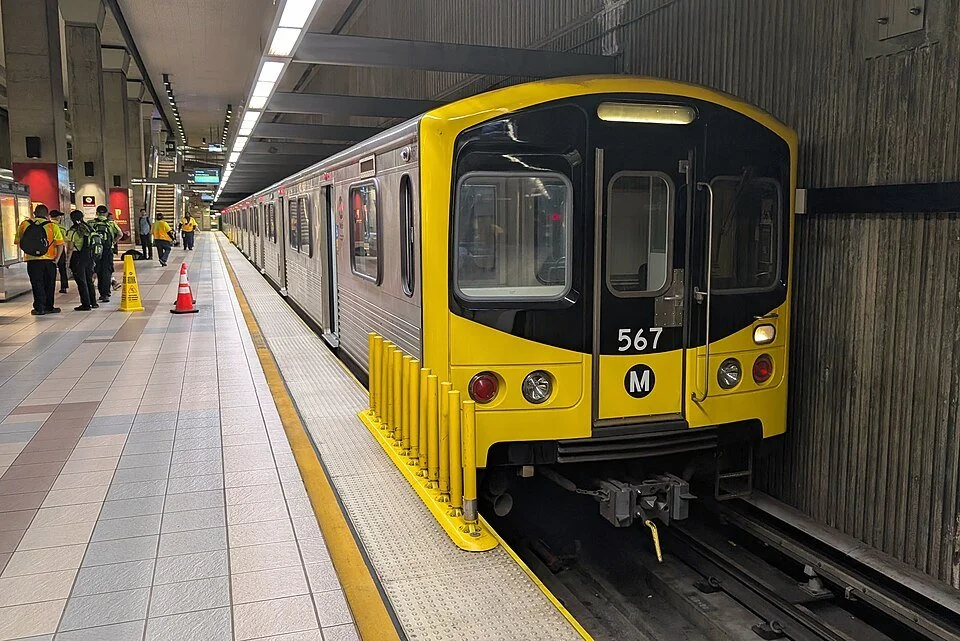
LA Metro Union Station. Los Angeles, California.
The 65-Year Wait Nobody Planned For
Here's what really gets me. This wasn't a 20-year project. It was a 65-year project.
Back in 1961, the Los Angeles Metropolitan Transit Authority proposed the "Backbone Route", a subway along Wilshire Boulevard from Westwood all the way to Downtown, then elevated rail to El Monte. In 1962, Governor Pat Brown stood in downtown LA next to a rotary drilling rig and literally said, "Let's start drilling!"
They estimated it would take three years to build.
Sixty-five years later, the first section just opened.
Think about that. In 1962, they thought they'd have a full subway by 1965. JFK was president. The Beatles hadn't even come to America yet. That's how long LA has been trying to build this thing.
What happened? Funding fell through. Voters rejected ballot measures in 1968 and 1974. The project got shelved, resurrected, rerouted, banned, unbanned, and fought over by 88 different cities with 88 different priorities. Classic LA.
The Mayor Who Actually Got It Moving
By the time Antonio Villaraigosa got elected mayor in 2005, the Wilshire subway was basically a running joke. But Villaraigosa came in swinging with the same bold promises: "Subway to the sea." "Most utilized subway in the nation, maybe the world." "Most cost-effective public-transportation project in America."
Classic political overselling, right? But here's the thing, he actually got the ball rolling this time.
See, before Villaraigosa, there was this federal ban on subway tunneling through parts of the Westside. Something about a methane gas explosion at a Ross Dress for Less back in 1985 that spooked everyone. Rep. Henry Waxman had pushed through legislation basically killing any subway dreams for decades.
But in 2005, Waxman reversed his own ban after a panel said modern tunneling tech made it safe. That's when things started moving. Slowly. Very slowly.
The Reality Check: Groundbreaking to Opening
Metro broke ground in November 2014. Original timeline? Supposed to be done by 2023. Cost estimate? $2.8 billion.
What actually happened? Opened May 2026. Final cost? $3.51 billion.
Look, anyone who's been in construction knows how this story goes. You start digging and find metal beams nobody knew about. Workers literally had to shovel them out by hand to clear the way for the tunnel boring machines. The project became the longest tunneling effort through tar-infested sand in US history. Not exactly something you can predict when you're drawing up initial estimates.
They deployed two massive tunnel boring machines, "Elsie" and "Soyeon" (yes, they name them), and those things are engineering marvels. 1,000-ton beasts chewing through LA's underground. The tunneling itself finished in March 2021, but then came all the station work, electrical systems, testing, more testing, and even more testing.
What Contractors Should Actually Care About
From a builder's perspective, here's what matters:
The Scale: Nearly 4 miles of subway tunnel, three full stations with elevators, escalators, ADA accessibility, integrated artwork, landscaped plazas. This isn't some basic cut-and-cover operation.
The Methods: Deep underground construction through challenging geology, coordinated street-level work to minimize disruption, and somehow they kept Wilshire Boulevard mostly functional throughout. That's the kind of sequencing and staging that separates pros from amateurs.
The Timeline: A decade from groundbreaking to opening. When you're bidding on complex infrastructure, remember this project. Original timelines mean nothing when you're dealing with unknowns underground.
The Money: Started at $2.8B, ended at $3.51B. That's roughly 25% over budget, which honestly isn't terrible for a project this complex that ran into serious site conditions nobody fully anticipated.
The Bigger Picture
Sections 2 and 3 are still under construction. Section 2 hits Beverly Hills and Century City (spring 2027 target). Section 3 goes to UCLA and the VA Hospital (fall 2027 target). The full vision is about 9 miles of new subway.
Will they hit those dates? Based on Section 1's track record... I'll believe it when I see it. But that's infrastructure for you.
What I find interesting is how this project kept going despite decades of opposition, NIMBY pushback, lawsuits from Beverly Hills Unified School District (seriously, they spent $10M+ fighting it), funding challenges, political turnover. Villaraigosa left office in 2013, but the project survived him.
That's rare. Most mega-projects die when the champion leaves. This one had enough momentum, and voter-approved funding from Measure R (2008), to keep rolling.
My Take
As someone who's worked on everything from residential additions to commercial builds, I respect the hell out of the teams that pulled this off. The engineering, the coordination, the problem-solving when those metal beams showed up mid-tunnel, that's real craftsmanship at scale.
Is it late? Yes. Over budget? Yes. But it's also a functioning subway under one of LA's most congested corridors, and riders can now get from Union Station to La Cienega in about 20 minutes instead of the 40-90 minutes by car.
For contractors and construction tech folks, projects like this are why we need better tools. Imagine trying to coordinate all the trades, track progress across a 4-mile underground site, manage thousands of RFIs, and keep stakeholders updated. The amount of documentation alone is staggering.
That's exactly why tools like Dimecraft exist, to make estimating, takeoffs, and project planning faster and more accurate, especially when you're dealing with complex site conditions and tight coordination requirements.
Bottom Line
The LA subway extension opens tomorrow. Governor Pat Brown said "let's start drilling" in 1962 with a three-year timeline. Sixty-five years later, we're getting 3.92 miles of new subway and three stations.
That's not a timeline. That's a generational saga.
It cost more than expected (always does). It took longer than planned (see: always does). But barring some last-minute disaster, tomorrow at 12:30 PM, it's real and functional, representing what's possible when people commit to solving hard infrastructure problems despite the obstacles, even if it takes literal generations to make it happen.
Now let's see if they can actually hit 2027 for the next sections. I'm not holding my breath, but after 65 years, what's a couple more?
Want to streamline your own construction projects? Check out how Dimecraft helps contractors handle takeoffs and estimates directly on-site with our iPad-first platform. Because whether you're building a subway or a single-family home, accurate planning matters.
Keep reading
How to do a construction takeoff on iPad
3D Concrete Printing Moves From Demo to Job Site This February
Machana Labs: From CAD to Metal in Days.