Cold Weather Construction: The Standards, the Data, and the Cost Gap
ModCon Proves Itself during Winter
Anyone who has worked a northern job site in February knows the routine. Frozen ground. Short daylight hours. Equipment that takes longer to warm up than the crew. Schedules stretch. Tempers shorten.
This winter, however, one multifamily housing project took a different path. Instead of fighting the season, the team shifted most of the heavy work indoors.
Factory First, Field Second
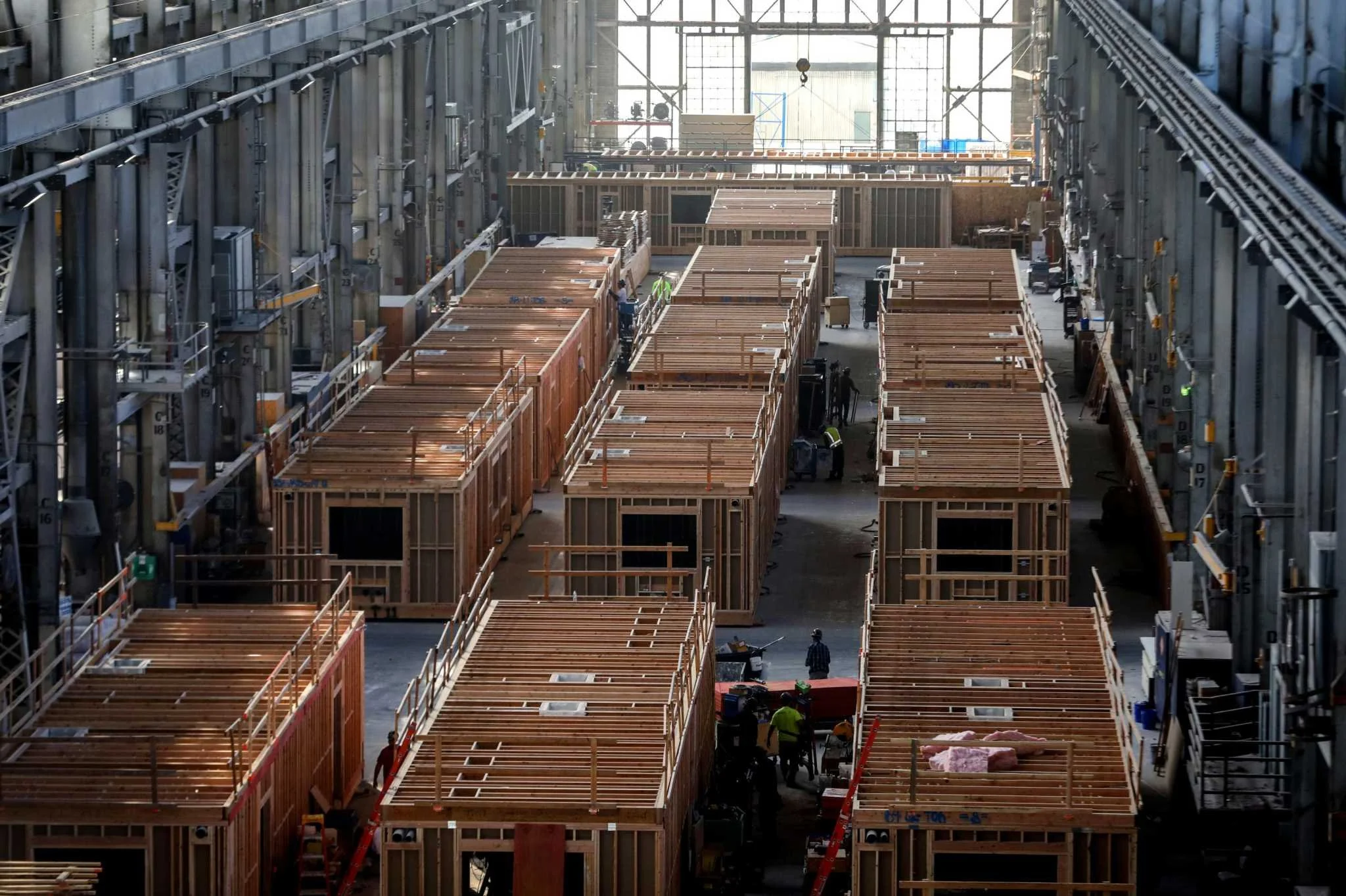
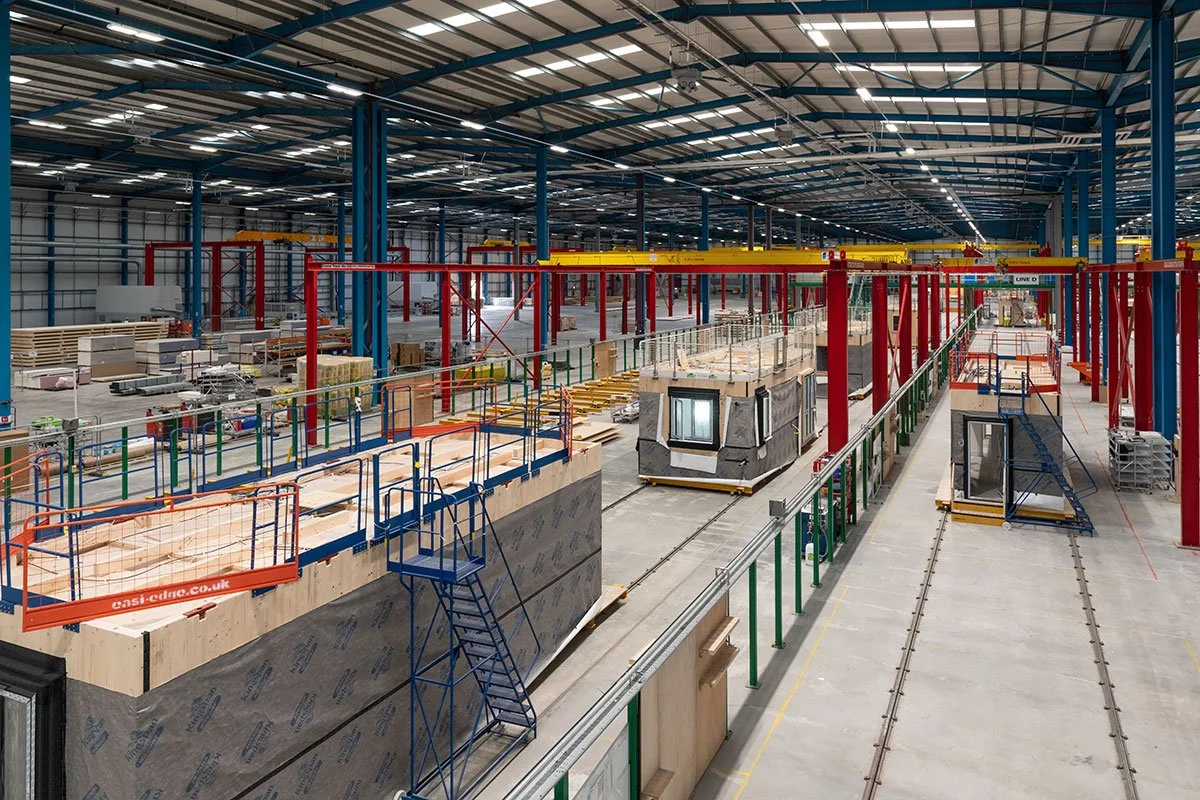
Rather than framing walls and roughing in mechanical systems onsite, the developer relied on modular fabrication. Entire apartment sections were built inside a climate-controlled facility while foundation crews handled site preparation.
By the time the modules were loaded onto trucks, they already contained insulation, electrical wiring, plumbing lines, drywall, and windows. When they arrived at the site, the work resembled assembly more than construction.
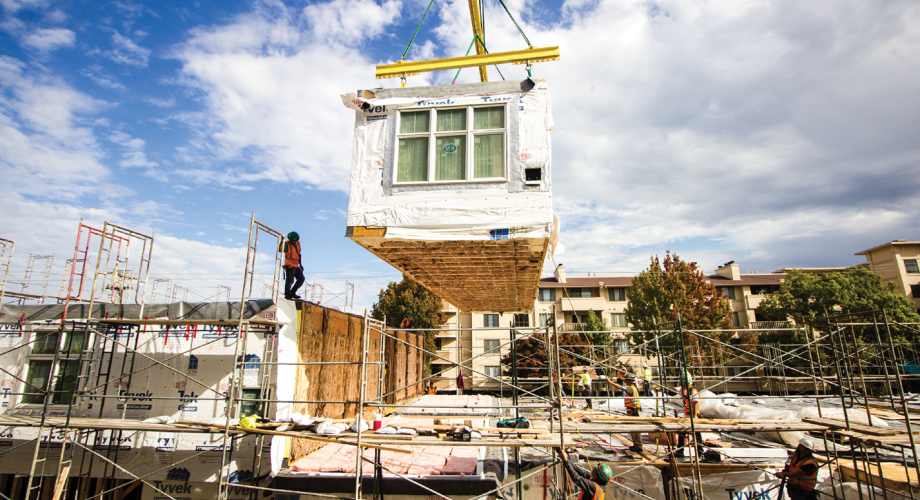
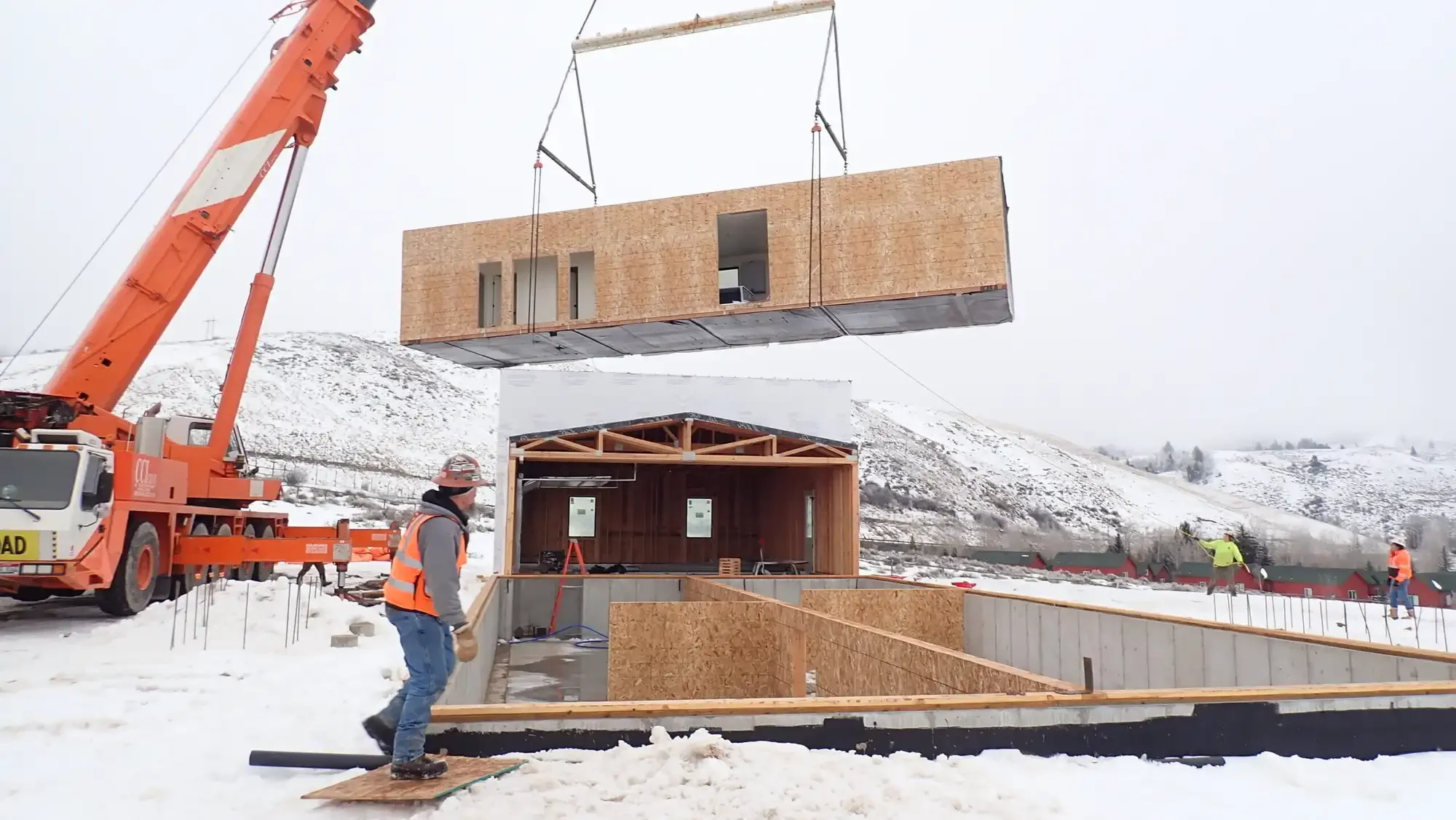
Crews used cranes to set the units during clear weather windows in early February. Because the detailed work had already been completed in the factory, field time was reduced to structural connections, sealing joints, and tying in utilities.
Less exposure to wind and freezing temperatures meant fewer weather delays.
Technology Behind the Scenes
The speed was not just about prefabrication. Digital coordination tools played a quiet but important role. BIM, Building Information Modeling allowed the team to work through sequencing before materials were ever ordered. Project management software kept the factory floor, transport logistics, and onsite supervisors aligned. When forecasts shifted, schedules were adjusted quickly instead of days later.
Winter work is mostly a documentation problem disguised as a weather problem. The temperature thresholds, protection periods, and strength requirements are written down in standards that predate most of the people arguing about them on site. What is not well documented is the cost, and that gap is where most winter money gets lost.
Here are the numbers that are actually established, the ones that are not, and an honest look at whether building in a factory solves any of it.
Cold weather concreting: the thresholds
ACI 306R-16 defines cold weather concreting as beginning when air temperature has fallen to, or is expected to fall below, 40 degrees Fahrenheit during the protection period.
Watch for a common source of argument here. The older ACI 306.1-90 specification and NRMCA use a stricter trigger: a period when for more than three successive days the average daily outdoor temperature drops below 40 degrees, ending when temperature exceeds 50 degrees for more than half of any 24 hour period. Two different definitions, both current in circulation, which is why crews and inspectors sometimes talk past each other.
The number that governs damage is 500 psi. Concrete protected from freezing until it reaches at least 500 psi compressive strength will not be damaged by a single freeze thaw cycle. At 50 degrees, most well proportioned mixes get there within 48 hours. Concrete that freezes before that can lose more than 50 percent of its potential strength. Note also that concrete freezes at roughly 25 degrees rather than 32, because of dissolved solids, and that air entrained concrete should reach 3,500 psi before exposure to freeze thaw cycling in the presence of moisture.
| Section least dimension | Minimum temperature as placed and maintained |
|---|---|
| Less than 12 in. | 55°F |
| 12 to 36 in. | 50°F |
| 36 to 72 in. | 45°F |
| Greater than 72 in. | 40°F |
Two related rules that get missed. Concrete temperature should not exceed the recommended placement value by more than 20 degrees, because hot concrete in cold air cracks. And after protection ends, the allowable gradual temperature drop in the first 24 hours runs from 50 degrees for thin sections down to 20 degrees for sections over 72 inches. Pulling blankets off a wall on a cold morning is a thermal shock decision, not a housekeeping decision.
Protection period, from ACI 306R-16: two days for no load and not exposed, three days for no load and exposed, six days for partial load and exposed. Using Type III cement or adding roughly 100 pounds of cement per cubic yard cuts each of those roughly in half. For fully loaded members, determine it by strength rather than by calendar.
One operational fact that changes sequencing more than any other: a 20 degree drop in concrete temperature approximately doubles setting time.
What crews get wrong
Every contact surface, meaning subgrade, formwork, and reinforcement, must be above 32 degrees and free of ice and snow before placement. Placement on frozen ground is prohibited outright, and doing it produces settlement later rather than a problem you can see that day.
Unvented direct fired heaters introduce carbon dioxide into the enclosure, which carbonates the slab surface and leaves it soft, chalky, and dusting. It is also an asphyxiation hazard. Vent them.
Corners and edges lose heat fastest. Insulation at corners and edges should be roughly three times the thickness used on flat wall and slab areas.
Accelerating admixtures do not prevent concrete from freezing. They shorten setting time. Calcium chloride is limited to 2 percent by weight of cement and is prohibited in prestressed or corrosion sensitive work.
Test cylinders must be stored at 60 to 80 degrees for the first 24 to 48 hours per ASTM C31. Field cured cylinders left outside will break low and start an argument you cannot win with data you generated incorrectly.
Cold weather masonry
Masonry has its own thresholds under TMS 602, and they are tiered rather than binary. The normal range is 40 to 90 degrees, and below 40 the cold weather provisions become mandatory.
| Ambient temperature | Protection method | Duration |
|---|---|---|
| 40°F to 32°F | Weather resistive membrane | 24 hours |
| 32°F to 25°F | Insulating blankets or equal | 24 hr ungrouted, 48 hr grouted |
| 25°F to 20°F | Complete insulating coverage | 24 hr ungrouted, 48 hr grouted |
| Below 20°F | Heated enclosures, electric blankets, infrared | 24 hr ungrouted, 48 hr grouted |
Supporting requirements: do not use units below 20 degrees or units containing frozen moisture. Heat mixing water or sand to produce mortar between 40 and 120 degrees, and do not heat water or aggregate above 140. Mortar should be used within two and a half hours of mixing. Below 32 degrees, grout must be placed at a minimum of 70 degrees and used within an hour and a half. At 25 degrees and below, heat the units themselves to at least 40. Use windbreaks or enclosures when wind exceeds 15 mph.
Calcium chloride is prohibited in masonry mortar and grout because of metal corrosion, and antifreeze compounds are not recommended at all, since they reduce strength significantly. The governing principle behind every one of these numbers is that complete cement hydration only occurs at material temperatures of 40 degrees or higher.
Productivity: what the research actually supports
This is where the literature is weaker than the confidence with which it gets quoted. The most cited numbers come from studies conducted between 1974 and 1986, and one of the tables used most often in claims practice turns out not to be based on empirical study at all.
The frequently referenced NECA temperature study found performance declining above 80 and below 40 degrees, but it used two journeymen electricians installing duplex receptacles. NECA itself cautions against applying it broadly. The Army Corps CERL work from 1984 put productivity below 50 percent at roughly minus 10 degrees but is not trade specific. The Army CRREL cold environment factors from 1986 are described in the report itself as, at best, typical tentative values requiring field validation.
The MCAA loss of productivity factors, which assign 10, 20, and 30 percent losses for minor, average, and severe weather, deserve particular caution. Research by Ibbs and Sun found those percentages are based on contractor opinion rather than empirical study, and that MCAA has no records indicating any statistical study was undertaken. Acceptance in claims has collapsed accordingly: five of five cases accepted the method before 2000, but only two of nine from 2001 onward, and boards have never awarded the severe 30 percent rating.
The most useful defensible number for a developer comes from a 2014 peer reviewed simulation combining building information modeling with schedule analysis. Modeling full projects, it found additional man hours attributable to temperature and humidity of about 6.2 percent for a Newark project starting in October, 7.1 percent for Lexington starting in October, and 0.5 to 1.2 percent for Long Beach. A fall start in a cold winter market carries roughly a 6 to 7 percent man hour premium from climate alone.
More recent work published in 2025 found productivity drops significantly below 32 degrees, that operations cease entirely below about minus 10, that heavy snowfall reduces productivity by roughly 35 percent, and that wind at or above 20 mph reduces labor productivity 30 to 40 percent with crane operations stopping above 31 mph. Separate 2025 research in cold regions found snowfall, not temperature, was the dominant delay driver.
On winter cost premiums, a warning
No credible independently published per square foot or percentage cost premium for winter conditions could be located from ACI, AGC, RSMeans, a government agency, or a peer reviewed source. That is a genuine gap in the public literature.
The figure circulating most widely, that winter conditions add five to seven percent to a project, traces to a contractor’s own blog post with no cited source. Treat any winter cost number you see in trade press as unsourced unless it names a study. If you need real numbers, they come from an RSMeans subscription under Division 01 temporary heat and enclosures, or from a named general contractor’s actual cost codes.
One operational number that is documented: hydronic ground heaters thaw roughly 6 inches of frost per 24 hours, about three and a half feet over seven days, with a 3,000 foot hose unit covering around 6,000 square feet. The same units maintain concrete curing temperatures of 85 to 90 degrees.
For cost recovery, the measured mile method ranks well above industry factor tables in the accepted evidence hierarchy. That means setting up dedicated winter cost codes and capturing productivity in both unimpacted and impacted periods, before you need the comparison.
Cold stress and the safety obligation
OSHA has no cold temperature standard. Employers are covered under the General Duty Clause, Section 5(a)(1) of the OSH Act, which creates a duty to protect workers from recognized hazards including cold stress.
The thresholds worth knowing: cold stress can occur above 40 degrees if workers become chilled from rain, sweat, or immersion. Hypothermia begins below a 95 degree core temperature against a normal 98.6. Trench foot can occur at temperatures as high as 60 degrees with constantly wet feet. Chilblains come from repeated exposure anywhere from just above freezing up to 60 degrees. At 40 degrees with a 35 mph wind, exposed skin experiences the equivalent of 28 degrees.
The National Weather Service wind chill chart marks frostbite onset for exposed skin at 30, 10, and 5 minutes. Zero degrees with a 15 mph wind gives a wind chill of minus 19 and frostbite in 30 minutes. Minus 20 with a 20 mph wind cuts that to 10 minutes.
One correction worth making: the work and warm up schedule table that circulates widely on jobsites is an ACGIH threshold limit value product. It is not an OSHA or NIOSH document, and it is frequently misattributed.
On injury data, BLS recorded 42,480 workplace injuries and illnesses involving ice, sleet, or snow requiring at least one day away from work in 2014, of which 34,860, or 82 percent, were falls on the same level. Median time away was nine days. Incidence ranged from 0.1 per 10,000 full time equivalents in California to 12.2 in Montana. BLS did not break that figure out by industry, so it is not a construction specific number.
Does building in a factory actually solve winter
This deserves a straight answer, because the industry claim and the evidence are not the same thing.
The Modular Building Institute states that modular construction takes place in a controlled factory setting, virtually eliminating weather related delays, and reduces schedules 30 to 50 percent. Those claims appear on its page with no citations, no third party benchmarks, and no supporting studies. The page makes no winter specific claim at all.
The McKinsey report that anchors most modular claims, from June 2019, states its evidence base as case studies and interviews, with no sample size or statistical method disclosed. Its own caveats are rarely quoted: early modular projects have a mixed track record on cost savings, savings remain more the exception than the norm, there is risk of up to 10 percent cost increases when logistics outweigh labor savings, and modular projects currently tend to take longer to design. On weather the entire report contains one seasonal reference, about limited winter daylight in Scandinavia, which is a daylight argument rather than a cold weather one.
What is defensible comes from a Department of Energy funded field study by the University of Nebraska at Lincoln, covering 25 offsite and 30 site built multifamily buildings for code compliance and 23 offsite against 128 site built for energy performance across four climate zones. It found modular achieved at least 30 to 40 percent shorter construction schedules depending on framing, volumetric modular cost 5 percent less than site built, and measured factory air leakage of 1.8 air changes per hour against 4.7 to 6.0 measured on site. That envelope quality finding is measured rather than asserted.
A 2025 systematic review of 256 peer reviewed studies repeated the headline benefit claims but concluded that quantified benefits remain largely literature derived rather than validated through field implementation data, citing a lack of large scale operational data.
So the honest version is this. Module fabrication happens indoors, so the concreting, masonry, and productivity penalties above do not apply to that scope. Faster enclosure shortens the temporary heat and hoarding window, which is what actually drives winter cost. Both of those are real. What cannot be supported is any specific percentage of weather delays eliminated, or the claim that modular is weather independent. Excavation, foundations, utilities, frost protection, crane setting, and weather tight closure of module joints all still happen outdoors, crane picks stop above roughly 31 mph wind, and module transport is exposed to snow and road restrictions. No study isolating weather as the mechanism behind modular’s schedule advantage could be found.
Manufacturer failure is also a documented risk rather than a hypothetical. Katerra, once valued at $6 billion, went bankrupt in June 2021 and was unable to complete many projects, leaving unbonded work with significant losses.
How much of the market actually slows
Census Bureau seasonal adjustment documentation explicitly cites the average January decrease in Northeastern new home construction due to cold and storms, and explains a January seasonal factor of 0.80, meaning raw January activity running about 20 percent below trend before adjustment.
That is worth internalizing, because it means every monthly construction headline you read has already been scrubbed of winter. The raw swing is larger than the reported one. Not seasonally adjusted monthly housing starts show a winter trough running roughly 67,000 to 100,000 units per month from December through February against a summer peak around 129,000 to 134,000, on the order of a 25 to 40 percent raw seasonal swing.
Sources
ACI 306R-16, Guide to Cold Weather Concreting
NRMCA CIP 27, cold weather concreting
USDA NRCS, cold weather concreting fact sheet
ACI 306.1-90 (Reapproved 2002), specification for cold weather concreting
Brick Industry Association Technical Note 1, hot and cold weather construction
Concrete Masonry and Hardscapes Association TEK 03-01C
Revay Report, the impact of weather on productivity, June 2025
Ibbs and Sun, use of the MCAA method in loss of productivity claims
Shan and Goodrum, temperature and humidity impact at project level, Buildings, 2014
Šopić et al., quantifying adverse weather impact on productivity, Applied Sciences, 2025
OSHA, cold stress guidance
National Weather Service wind chill chart
BLS, work injuries involving ice, sleet, or snow, 2014
US DOE and University of Nebraska, modular multifamily field study
Zohourian et al., modular construction comprehensive review, Buildings, 2025
US Census Bureau, Survey of Construction seasonal adjustment
Keep reading
ADUs and prefab in 2026: the rules, the costs, and the real timelines
Why pre-con determines whether you get paid
Wall design calculators for IBC 2024 and ASCE 7-22