
Wooden Renaissance: Codes + Innovation Smash Market Barriers
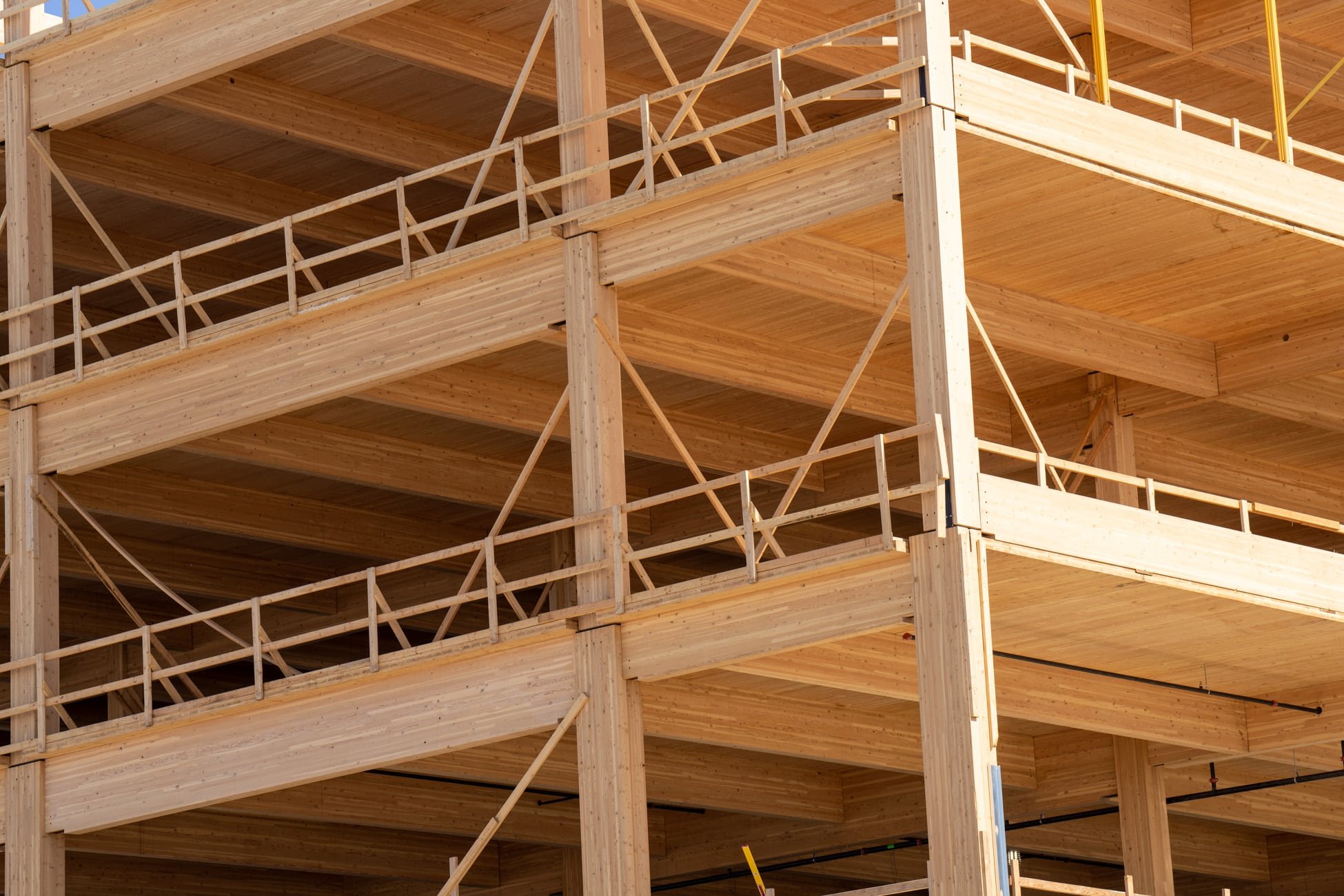
We are currently witnessing one of the most significant shifts in construction methodology in a century. We are entering a new "Wooden Age," but this isn't a return to log cabins. It’s a high-tech revolution driven by a perfect storm of two factors: radical updates to building codes and the maturation of mass timber products.
Let’s be honest. For decades, if you were a developer looking at a project over five stories, wood wasn't even part of the conversation. You were talking concrete and steel. Wood was for single-family homes and low-rise apartments, the "stick-frame" world. It was flammable, structurally limited, and frankly, viewed as "small time."
That view is now obsolete. This isn't just about sustainability (though that’s huge). This is about the doors blowing off a massive, previously untappable segment of the commercial and multi-family market. Here is why the "timber ceiling" has finally been broken.
The Code Revolution: Unshackling Design
For years, prescriptive building codes were the primary bottleneck for wood innovation. You couldn’t build tall with wood because the book said you couldn’t. It was that simple.
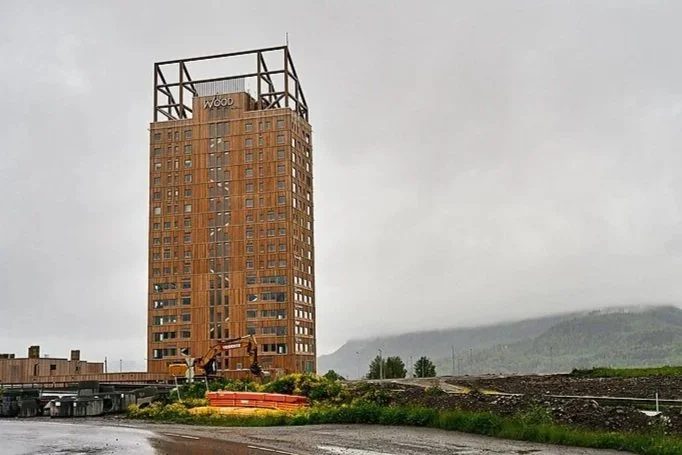
The game-changer was the acceptance of tall mass timber in the International Building Code (IBC). The 2021 IBC updates were a watershed moment, introducing three new construction types based on mass timber, allowing structures up to 18 stories.
Suddenly, wood is legally viable for high-density urban infill. These code changes didn't happen in a vacuum. They were the result of rigorous fire testing and structural analysis proving that engineered wood doesn't behave like standard lumber in a fire. It chars, creating a protective layer that maintains structural integrity far longer than bare steel, which buckles under intense heat.
By recognizing this science, code officials have effectively unlocked billions of dollars in potential development projects that were previously restricted to more carbon-intensive materials.
It’s Not Lumber, It’s Engineering
The second half of this equation is the product itself. If you are still picturing 2x4s when I say "wood construction," you’re missing the point.
We are talking about Mass Timber, specifically Cross-Laminated Timber (CLT), Glulam, and Laminated Veneer Lumber (LVL). These aren't just cut trees; they are highly engineered building systems.
CLT panels, for instance, are immensely strong, dimensionally stable, and can be prefabricated to exact millimeter tolerances off-site. This allows for "kit-of-parts" assembly on-site, drastically cutting down construction schedules and reducing on-site labor requirements, a massive advantage in our current labor shortage climate.
These products allow architects to design large spans and open floor plans that rival concrete, but with a fraction of the weight, reducing foundation costs in difficult soil conditions.
The "Missing Middle" Market Explosion
So, what does this combination of new codes and new tech actually mean for the market?
It means wood is now the primary contender for the "missing middle", that massive gap between single-family sprawl and concrete skyscrapers. We are talking about 6-to-12-story mixed-use developments, mid-rise affordable housing, and boutique office buildings.
Developers are realizing that for buildings in this height range, mass timber is often faster to build than concrete and cheaper than steel.
Furthermore, the market is demanding it. Tenants, particularly in the tech and creative sectors, are willing to pay a premium for the biophilic design elements of exposed wood interiors. It looks better, feels healthier, and tells a sustainability story that concrete simply cannot match.
The View Forward
The construction industry is notoriously slow to adapt, but the momentum behind mass timber is now undeniable. We have moved past the "proof of concept" phase.
The barriers that relegated wood to the sidelines, fire fear and height limits, have been dismantled by rigorous engineering and updated codes. For developers, architects, and GCs, this means a wider playing field and more opportunities to bid on projects that were once out of reach.
The future of our cities isn't just gray. It's looking increasingly grain-filled. It’s time to get on board.
Keep reading
How to do a construction takeoff on iPad
Sound Wall Isolation: Stop the Flanking Noise
The Numbers in the Wall